

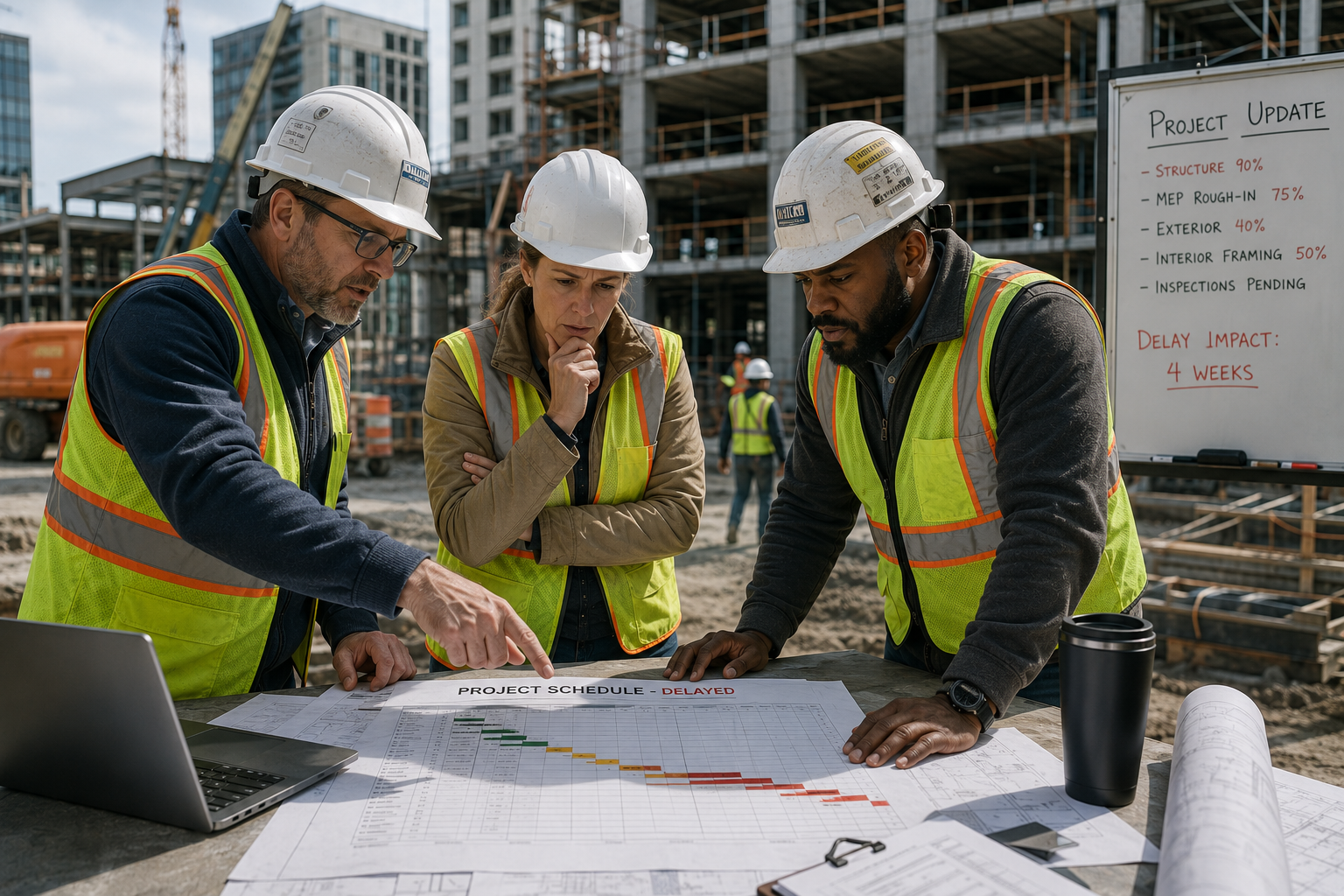
Every construction company experiences problems.
Unexpected weather.
Material shortages.
Permit delays.
Equipment failures.
Those challenges are part of the industry.
The companies that consistently outperform their competitors aren’t the ones that avoid every problem.
They’re the ones that recover quickly.
That’s because projects rarely fail from one catastrophic event.
More often, they lose momentum one small disruption at a time.
A delayed approval.
An unanswered RFI.
Missing project information.
Poor communication.
Technology that isn’t available when it’s needed.
Individually, these interruptions seem manageable.
Collectively, they slow decisions, reduce productivity, create frustration, and increase costs.
Keeping projects moving isn’t about avoiding every challenge.
Learn what operational systems support project momentum in What “Keeping Projects Moving™ Actually Requires Behind the Scenes.”
It’s about creating systems that keep work progressing despite those challenges.
That’s the purpose of the Construction Technology Framework™.
Learn how the five pillars work together in The 5 Pillars of the Construction Technology Framework™.
Why Momentum Matters More Than Most Contractors Realize
Momentum is one of the most valuable assets on any construction project.
When work flows consistently:
- Crews remain productive.
- Subcontractors stay coordinated.
- Decisions happen faster.
- Clients gain confidence.
- Schedules remain predictable.
Once momentum begins to slow, the opposite happens.
Questions begin to stack up.
Information becomes harder to locate.
Communication becomes reactive.
Leadership spends more time solving today’s problems than planning tomorrow’s work.
Momentum isn’t just about schedules.
It’s about operational confidence.
Small Delays Become Bigger Problems
Very few projects are delayed because of one major event.
More commonly, delays build over time.
Imagine this sequence.
Monday
A drawing revision isn’t distributed to everyone.
Tuesday
The field team pauses work while confirming the latest plans.
Wednesday
A subcontractor arrives without updated information.
Thursday
An inspection is postponed because documentation isn’t complete.
Friday
The schedule shifts.
None of those events seem catastrophic.
Together, they create lost productivity, increased costs, and unnecessary stress.
That is how momentum quietly disappears.
What High-Performing Contractors Do Differently
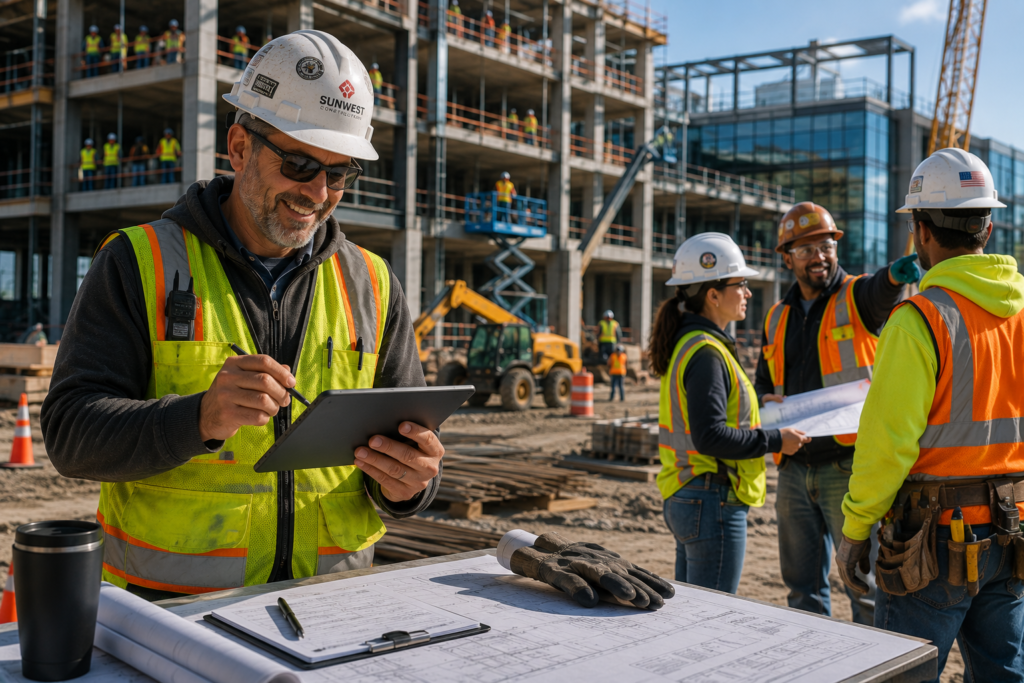
Successful contractors understand that momentum doesn’t happen by accident.
It is supported by operational consistency.
They build systems that help teams respond quickly when problems occur.
That includes:
- Standardized communication
- Reliable access to project information
- Clear accountability
- Consistent field support
- Business continuity planning
When one issue arises, the rest of the system continues supporting the project.
Instead of reacting to every disruption, leadership focuses on maintaining forward progress.
Keep Work Moving. The Fifth Pillar of the Construction Technology Framework™
The fifth pillar of the Construction Technology Framework™ is:
Keep Work Moving™
Everything in the framework leads here.
Communication.
Field support.
Project information.
Risk reduction.
All of those pillars exist for one purpose.
To help construction companies maintain project momentum.
The goal isn’t perfection.
The goal is reducing operational friction so projects continue moving even when unexpected challenges occur.
Leading contractors understand that resilience is built before it’s needed.
Real Example
A commercial contractor in Southern California wasn’t dealing with major technology failures.
Instead, leadership noticed that projects always seemed to feel rushed near completion.
Schedules regularly slipped during the final weeks.
Project managers spent increasing amounts of time coordinating information.
Superintendents were constantly following up on missing updates.
No single issue explained the delays.
When leadership evaluated operations through the Construction Technology Framework™, they discovered several small gaps working together:
- Communication processes varied between projects.
- Information wasn’t consistently organized.
- Field support differed from one jobsite to another.
- Recovery procedures weren’t clearly defined.
Many of these inconsistencies begin with the field workarounds discussed in Why Field Teams Create Workarounds (And What It Costs Construction Companies).
After standardizing these operational systems, projects became more predictable.
Not because fewer problems occurred.
Because the organization responded to those problems more consistently.
Why This Matters for Construction Leaders
Construction will always involve uncertainty.
Projects change.
Conditions change.
Priorities change.
The question isn’t whether challenges will occur.
The question is whether your organization is prepared to continue moving forward when they do.
Companies that consistently deliver projects on time don’t simply react faster.
They build operational systems that reduce friction before it becomes disruption.
That mindset creates confidence throughout the organization.
Why Contractors Across Southern California Use M Squared Networks
For more than a decade, M Squared Networks has helped construction companies throughout Orange County, Los Angeles County, Riverside County, and the Inland Empire improve operational consistency through the Construction Technology Framework™.
We’ve seen that the companies with the strongest project performance aren’t necessarily the ones with the newest technology.
They’re the ones with systems that support communication, field operations, project information, risk management, and continuity.
Because when those systems work together, projects continue moving.
Final Takeaway
Projects don’t lose momentum overnight.
They lose momentum through dozens of small interruptions that gradually slow progress.
Communication delays.
Communication is often the first area where momentum begins to slow, as discussed in Why Construction Communication Breakdowns Cost More Than Most Contractors Realize.
Information confusion.
Reliable project information is essential to maintaining momentum, as discussed in The True Cost of Outdated Drawings and Project Information.
Inconsistent field support.
Operational risk.
Weak continuity planning.
Operational resilience is equally important during cybersecurity incidents, as discussed in Construction Cybersecurity Isn’t About Technology. It’s About Project Continuity.
Individually, each issue seems manageable.
Together, they create unnecessary friction.
The contractors who consistently outperform competitors aren’t simply solving problems.
They’re building systems that prevent small problems from becoming major disruptions.
That’s the purpose of the Construction Technology Framework™.
And that’s how successful contractors Keep Projects Moving™.
Is Your Company Built to Keep Projects Moving?
Most contractors can identify major operational problems.
Fewer recognize the small gaps that quietly reduce productivity and slow projects over time.
A Construction Technology Review evaluates your communication, field support, project information, operational risk, and continuity across all five pillars of the Construction Technology Framework™.