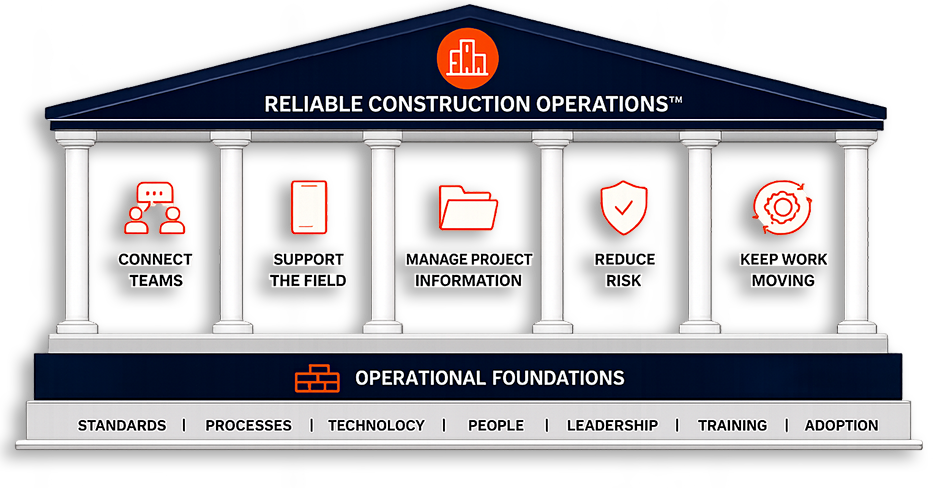
The Construction Technology Framework™ helps general contractors and specialty contractors align technology with the way construction operations actually work.
Years of working alongside contractors have revealed patterns that show up often, though every company is still different, which is why every relationship starts with learning how yours specifically operates.
For more than thirteen years, we’ve worked alongside contractors and specialty subcontractors throughout Southern California.
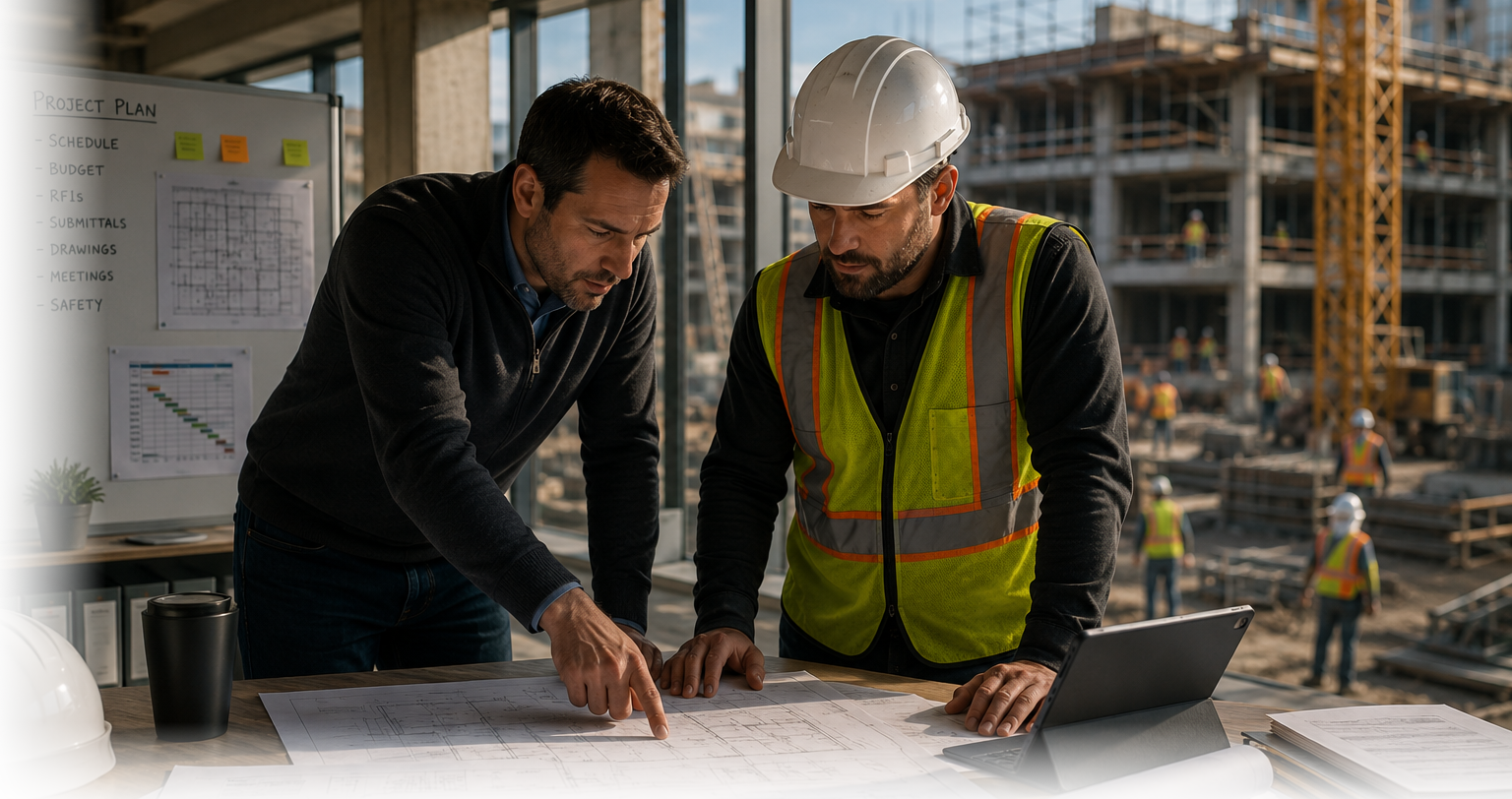
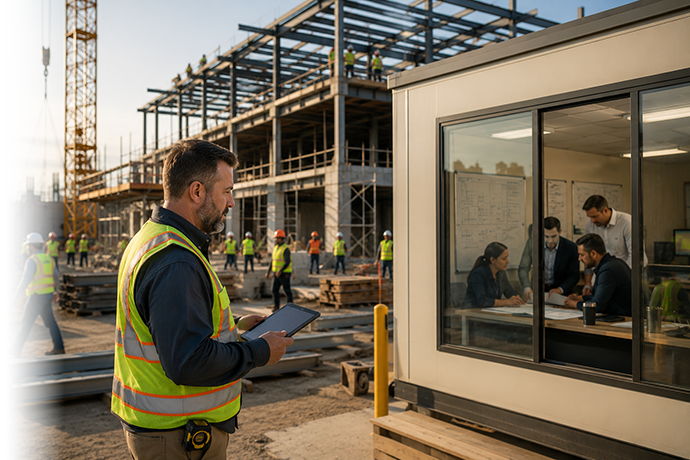
We’ve spent time in offices, on jobsites, and in project meetings. We’ve watched estimators, project managers, superintendents, controllers, and owners all rely on technology to keep work moving.
Yet despite different trades, different software, and different company sizes, the same operational challenges kept appearing.
Project information lived in multiple places.
Office and field teams weren't always working from the same information.
Technology was purchased without a plan for adoption.
Processes changed from one project to the next.
Communication depended more on individuals than on consistent systems.
Over time, one thing became clear.
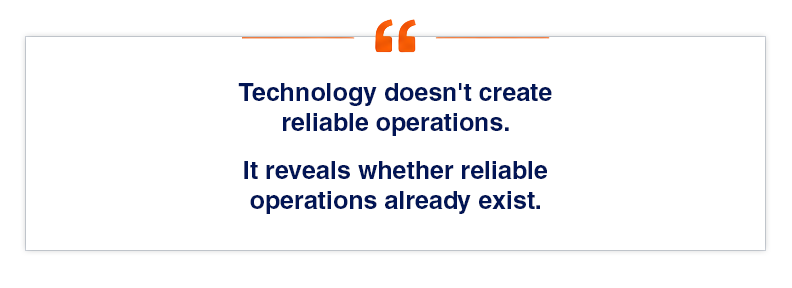
These weren’t technology problems. They were operational problems that technology simply exposed.
That’s why we developed the Construction Technology Framework™, to help construction companies organize technology around the way they actually operate, creating more reliable communication, better access to information, stronger processes, and ultimately, projects that keep moving.
Every recommendation we make begins with a Construction Technology Review™, where we evaluate how each pillar supports your business.
Why the Framework Exists
Why We Created the Construction Technology Framework™
Most construction companies already own the technology they need. The challenge is getting people, information, and processes to work together consistently.
The Real Issue
Construction Contractors Don't Have an IT Problem
The difference isn't the technology. It's the order in which it's applied.
Technology First
Technology is implemented first, leaving people, communication, and operational processes to adapt afterward.
The result is disconnected systems, inconsistent workflows, and avoidable project delays.
Technology
Office
Field
Problem
Operations First
People
Processes
Information
Technology
Reliable Construction Operations™
People, processes, and information are aligned first. Technology is then applied to support operations, creating consistency, improving communication, and helping projects keep moving.
The Solution
A Framework Built for Construction
Organizing technology around the way construction companies actually operate.
The Framework
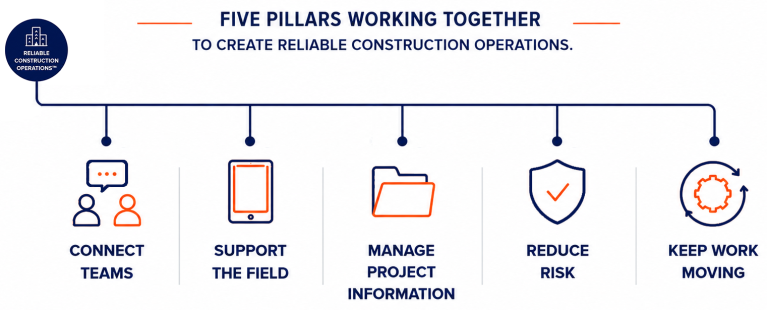
Five Pillars. One Goal.
Every construction contractor is different, but the operational challenges are surprisingly consistent. The Construction Technology Framework™ organizes those challenges into five operational pillars that work together to keep projects moving.
The following sections explore each pillar in detail and show how they work together to create reliable construction operations.
Pillar 1
Connect
Teams.
Office • Field • Estimating • PMs • Superintendents
Communication shouldn't stop
at the office door.
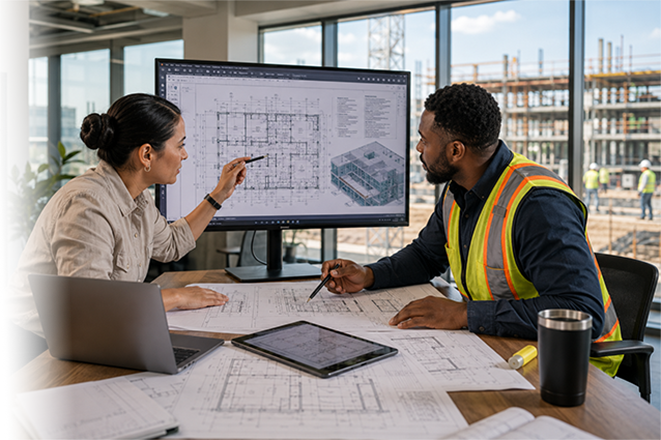
Successful construction contractors depend on people working together. When office staff, field teams, project managers, estimators, and subcontractors stay connected, information moves faster, decisions happen sooner, and projects stay on track.
Why This Matters
Miscommunication and disconnected systems create delays, mistakes, and rework. When teams can’t easily share information, small issues quickly become costly problems.
Connecting your construction teams creates a single source of truth, improves accountability, and gives everyone access to the information they need to keep projects moving.
Warning Signs
Office and field teams use different information or outdated documents.
Employees rely on phone calls, text, and emails to get work done.
Subcontractors receive outdated drawings or changes too late.
Teams recreate information instead of sharing it.
Nobody knows which version of a document or plan is current.
What Success Looks Like
Everyone works from the same information, all the time.
Project updates and changes are visible to the right people instantly.
Field questions are answered quickly and accurately.
Drawings, documents, and data stay synchronized and accessible.
Communication is proactive, clear, and easy to track.
We Evaluate This in Every Construction Technology Review™
During every Construction Technology Review™, we evaluate how office staff, field teams, and project managers communicate between the office and the field, identify operational bottlenecks, and recommend practical improvements tailored to your construction business.
Tablets • Mobile Access • Jobsite Connectivity • Remote Teams
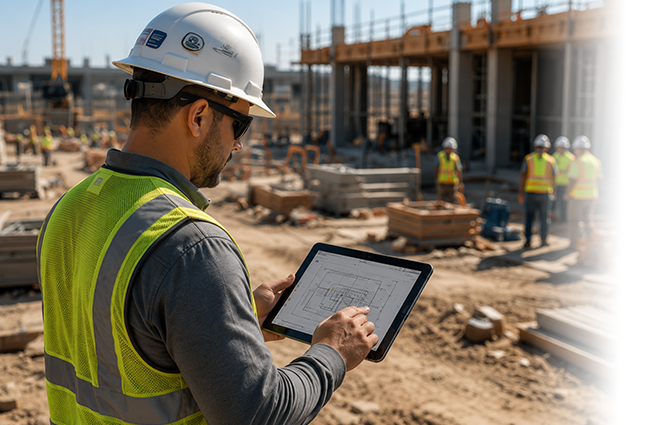
Field teams need secure access to the right information wherever work happens.
Construction contractors don’t work behind a desk. Reliable access in the field keeps superintendents, foremen, project managers, and field crews productive, informed, and ready to keep projects moving.
Why This Matters
Construction contractors make hundreds of decisions every day, and the field can’t afford to wait for information.
Waiting for updated drawings, searching for project documents, or relying on phone calls creates delays that compound throughout the day.
Supporting the field means giving construction teams reliable, secure access to the information they need, wherever the job takes them.
Warning Signs
Field crews rely on phone calls to verify drawings.
Employees drive back to the office for project information.
Mobile devices can’t access company files securely.
Different crews use different document versions.
Internet connectivity regularly interrupts work.
What Success Looks Like
Teams access current project information from anywhere.
Drawings update automatically across office and field.
Mobile devices connect securely to company resources.
Questions are answered faster with fewer delays.
Field productivity improves because information travels with the crew.
We Evaluate This in Every Construction Technology Review™
During every Construction Technology Review™, we evaluate how superintendents, foremen, and field teams securely access drawings, documents, and project information from wherever work happens, then recommend practical improvements that keep projects moving.
The right information is only valuable
if everyone can find it.
Project information changes constantly. When drawings, RFIs, submittals, and documents aren’t organized and easy to access, mistakes multiply and projects slow down.
Why This Matters
Construction teams depend on accurate information to make decisions every day.
When everyone works from the same organized source of truth, communication improves, rework decreases, and projects move forward with confidence.
Warning Signs
Employees save project files in different locations.
Teams aren’t sure which drawing revision is current.
RFIs and submittals are difficult to locate.
Project documents are shared through email attachments.
Important information depends on one person’s computer.
What Success Looks Like
Everyone works from current project information.
Drawings and documents stay organized automatically.
RFIs, submittals, and change orders are easy to find.
Teams spend less time searching for information.
Project decisions are made with confidence.
We Evaluate This in Every Construction Technology Review™
During every Construction Technology Review™, we evaluate how project information is organized, shared, and accessed across your office and field teams, then recommend practical improvements that reduce confusion and keep projects moving.
Small technology problems shouldn't become major project disruptions.
Every construction contractor faces operational risk. The goal isn’t to eliminate it, but to reduce it through consistent technology standards, reliable systems, secure data, and proactive planning before problems interrupt your projects.
Why This Matters
Construction contractors depend on predictable operations to keep schedules, budgets, and projects on track.
Reliable backups, cybersecurity, documented processes, and consistent technology standards help prevent small issues from becoming expensive project delays that affect your teams, schedules, and clients.
Warning Signs
Passwords and security practices vary between employees.
Backups aren’t tested regularly.
Critical processes depend on one person.
Technology standards aren’t consistently followed across projects.
Leadership has confidence in operational resilience.
We Evaluate This in Every Construction Technology Review™
During every Construction Technology Review™, we evaluate operational risk across cybersecurity, backups, documentation, technology standards, and business continuity, then recommend practical improvements that help protect your construction business and keep projects moving.
Operations • Productivity • Reliability • Business Continuity • Growth
Technology should keep your projects moving, not become another reason they slow down.
Reliable construction operations depend on more than good technology. Construction contractors need connected teams, accessible project information, consistent processes, and reliable systems that keep projects moving when their business needs them most.
Why This Matters
Construction contractors succeed when people, processes, and technology work together consistently.
Reliable operations reduce delays, improve communication, strengthen accountability, and allow your teams to stay focused on building projects instead of solving technology problems.
Warning Signs
Small technology issues regularly interrupt work.
Employees develop workarounds instead of following processes.
Project teams regularly lose time waiting for information.
Leadership spends too much time solving preventable issues.
Operations depend on reacting instead of planning.
What Success Looks Like
Technology supports the way your business operates.
Teams stay productive from office to jobsite.
Projects continue moving with fewer interruptions.
Leadership has confidence in day-to-day operations.
Technology becomes a competitive advantage instead of a daily concern.
We Evaluate This in Every Construction Technology Review™
During every Construction Technology Review™, we evaluate how your people, technology, and operational processes work together to identify opportunities that improve reliability, reduce disruption, strengthen day-to-day operations, and help keep every project moving.
The five pillars describe what needs to work. They are not the whole picture. Underneath them are five operational foundations that determine whether an improvement lasts or quietly reverts to how things were six months later.
Documentation. The environment is documented, so knowledge does not live only in one person’s head.
Standards. Devices, accounts, and configurations follow a consistent approach instead of accumulating one-off exceptions.
Processes. Recurring activities, like onboarding a new hire or closing out a project, follow a repeatable procedure instead of getting figured out differently every time.
Training. Employees understand not just how to use the technology, but how the company expects it to be used.
Governance. Someone owns each decision, exceptions are handled deliberately, and the environment gets reviewed on a schedule instead of drifting.
These foundations are not another pillar. They run underneath all five. Improving Support the Field, for example, usually means standardizing field devices, documenting how they are configured, building a process for deploying and replacing them, training field employees on how to use them, and deciding who is responsible for keeping that consistent as the company grows.
This is the difference between installing technology and improving operations. Installing a tool solves a problem once. Documentation, standards, processes, training, and governance are what keep it solved.
Beneath the Five Pillars
What Makes the Pillars Repeatable
AI comes up in almost every conversation we have with contractors now. It is not a separate pillar of the Construction Technology Framework™. It is a capability we evaluate across the five pillars that already exist, the same way we would evaluate any other tool.
Under Connect Teams, that might mean AI-assisted communication. Under Support the Field, tools that help field employees find information faster. Under Manage Project Information, search and summarization across project documents. Under Reduce Risk, how AI tools are governed, secured, and used responsibly. Under Keep Work Moving, automation that reduces administrative work.
AI only creates value when the foundation underneath it, the information, the processes, the security, is reliable. We do not recommend AI because it is popular. We look at where it can practically help a specific company’s operations, using the same framework we use for everything else.
A Common Question
AI Is Not a Sixth Pillar
Ready to See How Your Business Compares?
Let's Build More Reliable
Construction
Operations™.
Technology doesn’t keep projects moving. Construction operations do.
Schedule your Construction Technology Review™ to see how your business performs across the five pillars of the Construction Technology Framework™ and identify your biggest opportunities for improvement.
Identify Gaps
We evaluate your five pillars and pinpoint what’s slowing you down.
Prioritize Impact
We focus on the issues that create the biggest disruptions.
Deliver Solutions
You’ll receive practical, real-world improvements tailored to your business.
No Pressure. No obligation. Just clear answers and a path forward.
The Construction Technology Framework™ provides the roadmap. The Construction Technology Review™ shows you exactly where your business stands today and the practical steps to keep projects moving.