
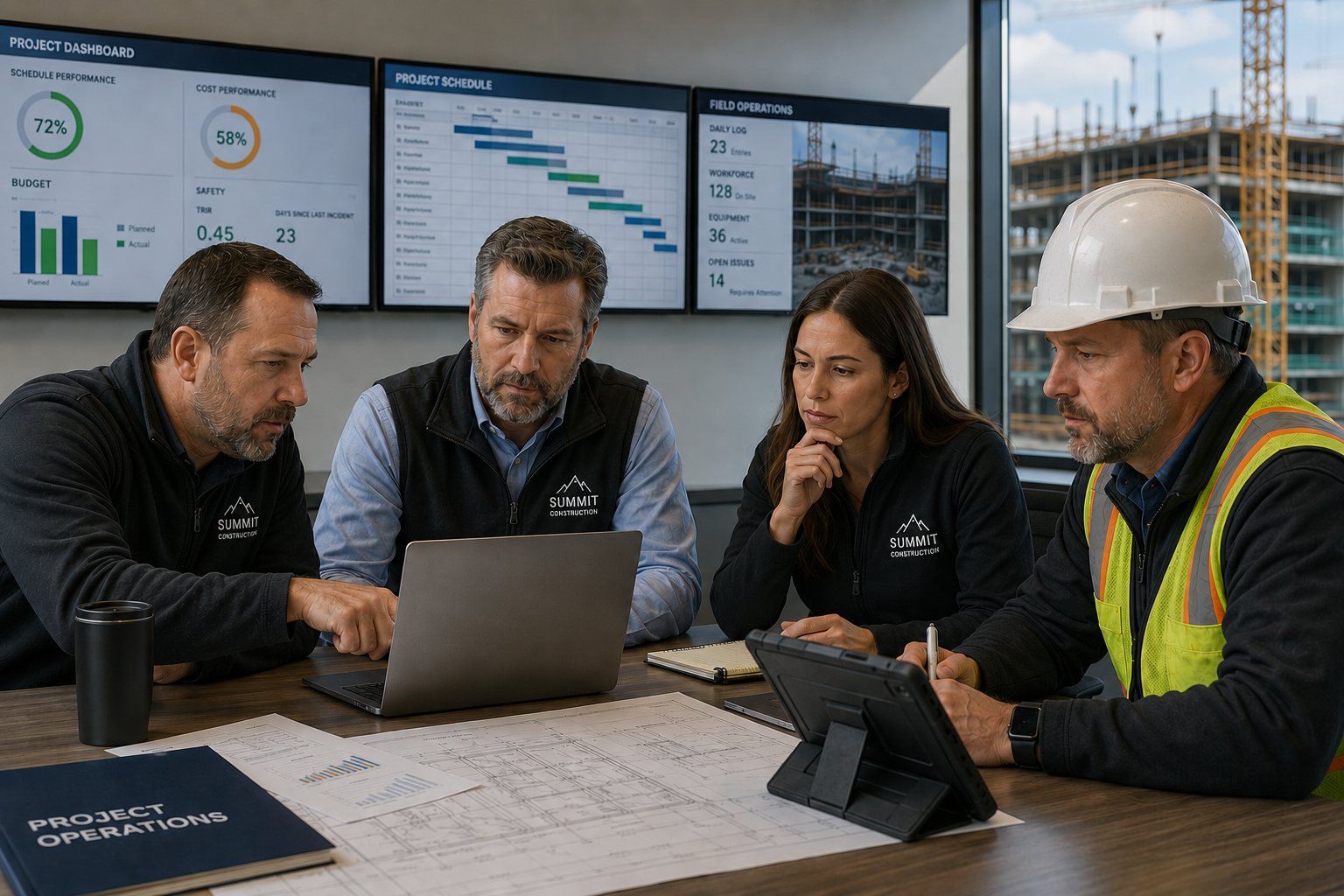
Most construction companies don’t realize how much time, money, and energy are spent reacting to problems.
The issue isn’t usually one major failure.
Instead, it is a constant stream of small disruptions:
- Communication breakdowns
- Missing information
- Connectivity issues
- Delayed decisions
- Technology frustrations
- Project interruptions
Over time, these disruptions become accepted as normal.
Teams adapt.
Workarounds emerge.
Productivity suffers.
Leadership spends more time solving problems than improving operations.
Many contractors assume this is simply part of construction.
It isn’t.
The most successful construction companies don’t eliminate every challenge.
They create systems that make challenges easier to manage.
The difference between reactive operations and predictable operations often comes down to one thing:
Operational alignment.
Many of these challenges begin when technology and operations become disconnected, as discussed in The Construction Technology Framework™: Why IT and Field Operations Don’t Align.
This is the purpose of the Construction Technology Framework™.
To help contractors reduce friction, improve consistency, and Keep Projects Moving™.
What Reactive Construction Operations Look Like
Most companies recognize obvious problems.
Few recognize patterns.
Reactive environments often include:
- Employees searching for information
- Communication varying between projects
- Field teams relying on workarounds
- Technology issues disrupting productivity
- Documentation stored in multiple locations
- Operational processes that depend on specific individuals
None of these issues appear catastrophic.
Together, they create operational drag.
Project managers spend more time coordinating than managing.
Superintendents spend more time resolving issues than moving work forward.
Leadership spends more time responding than planning.
The result is an organization that feels busy but struggles to become predictable.
The Hidden Cost of Constant Firefighting
Many contractors underestimate the cost of reactive operations.
The most significant costs are often invisible.
Many of these hidden costs are explored in How Technology Friction Quietly Reduces Construction Profit Margins.
Examples include:
Lost Productivity
Employees spend time locating information instead of acting on it.
Delayed Decisions
Communication gaps slow approvals and coordination.
Increased Risk
Problems remain hidden until they become operational disruptions.
Leadership Fatigue
Managers spend time resolving recurring issues rather than improving systems.
Reduced Scalability
As the company grows, existing problems become more difficult to manage.
The longer these issues continue, the harder they become to overcome.
Why Technology Alone Doesn’t Solve The Problem
Many contractors respond to operational challenges by purchasing new technology.
Sometimes that helps.
Sometimes it creates additional complexity.
Technology is only valuable when it supports operations.
New software cannot solve:
- Poor communication
- Inconsistent processes
- Information confusion
- Lack of accountability
- Weak operational systems
This is one reason many contractors become frustrated after investing in new tools.
The technology works.
The underlying operational problems remain.
Technology should support a system.
This is one reason many traditional IT providers struggle to support construction companies effectively, as discussed in Why Most MSPs Don’t Understand Construction Operations.
It should not be the system.
The Shift Toward Predictable Operations
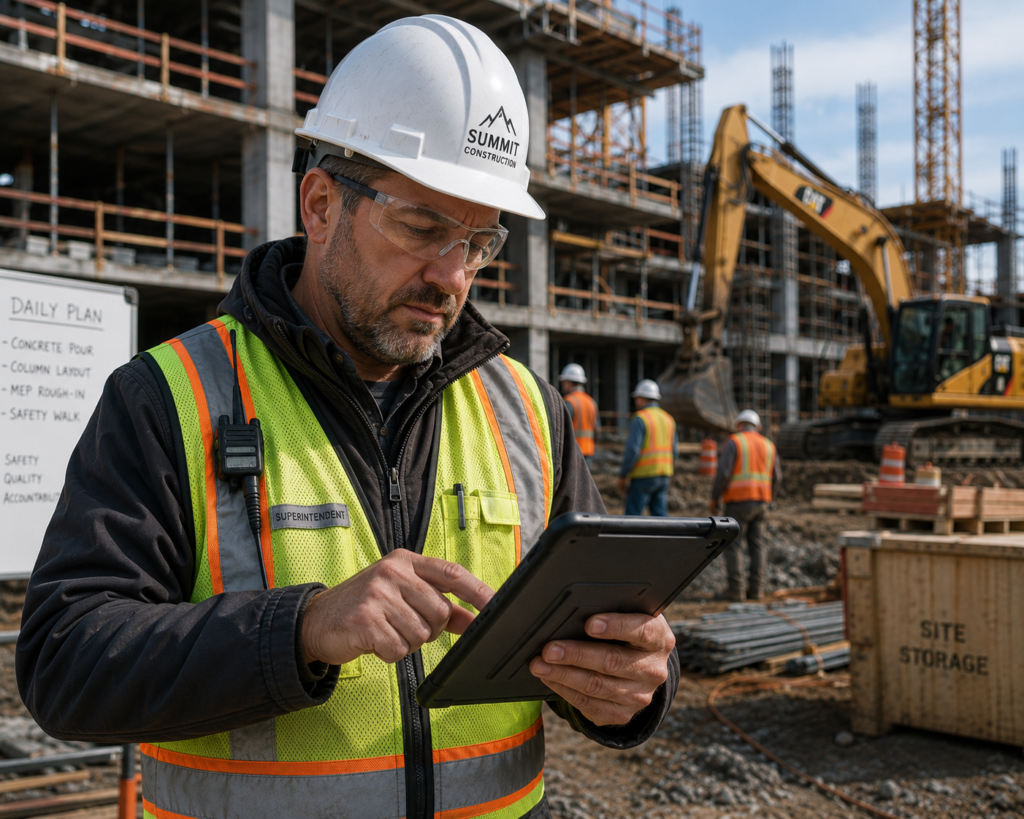
Predictable construction companies operate differently.
They do not spend all day reacting.
They focus on creating consistency.
These systems are the foundation of what we discuss in What “Keeping Projects Moving™” Actually Requires Behind the Scenes.
They establish standards for:
- Communication
- Information management
- Field support
- Risk reduction
- Continuity planning
As a result:
- Employees know where information belongs
- Teams communicate more effectively
- Field personnel receive faster support
- Problems are identified earlier
- Projects move more predictably
The goal is not perfection.
The goal is reducing friction.
How the Construction Technology Framework™ Creates Predictability
The Construction Technology Framework™ was developed around five operational pillars:
Learn more about each pillar in The 5 Pillars of the Construction Technology Framework™.
Connect Teams
Improve communication and coordination.
Support the Field
Ensure field personnel have reliable access to information and tools.
Manage Project Information
Create trust in project documentation and records.
Reduce Risk
Protect operations from avoidable disruptions.
Keep Work Moving
Maintain project momentum despite unexpected challenges.
Individually, each pillar provides value.
Together, they create operational consistency.
The framework helps contractors identify weaknesses before those weaknesses become project problems.
Real Example
A growing Southern California contractor experienced what leadership described as “constant operational noise.”
Nothing was fundamentally broken.
Projects were being completed.
Clients were satisfied.
Yet project teams continually experienced:
- Communication challenges
- Information gaps
- Inconsistent processes
- Technology frustrations
- Recurring operational interruptions
Leadership spent significant time solving the same types of problems repeatedly.
After evaluating operations through the Construction Technology Framework™, several patterns emerged.
The organization lacked consistency across multiple pillars.
Communication processes varied.
Project information was managed differently between teams.
Field support standards were inconsistent.
Risk management was largely reactive.
By creating more consistency across all five pillars, the company experienced:
- Faster communication
- Better visibility
- Reduced operational friction
- Greater accountability
- Improved project predictability
Technology did not become more important.
Operations became more aligned.
Why This Matters for Construction Leaders
Construction leaders are responsible for outcomes.
They need projects to move efficiently.
They need teams to remain productive.
They need visibility into operations.
They need confidence that systems will support growth.
Reactive environments make leadership more difficult.
Predictable environments create opportunities for improvement.
The longer a company grows, the more valuable operational consistency becomes.
That consistency rarely happens by accident.
It is intentionally built.
Why Contractors Across Southern California Use M Squared Networks
For more than a decade, M Squared Networks has helped construction companies throughout Orange County, Los Angeles County, Riverside County, and the Inland Empire improve operational consistency.
We’ve seen how communication challenges, information confusion, field support issues, and unmanaged risk create friction across projects.
The Construction Technology Framework™ was developed to help contractors align technology with operational outcomes.
Because technology should support project execution.
Not create additional obstacles.
Final Takeaway
Most construction companies do not suffer from a lack of technology.
They suffer from a lack of operational alignment.
The companies that consistently outperform competitors are those that create systems supporting communication, field productivity, project information, risk management, and continuity.
They move from reacting to problems toward managing predictable operations.
That is the purpose of the Construction Technology Framework™.
And that is how contractors Keep Projects Moving™.
How Predictable Are Your Construction Operations?
Most contractors know where major problems exist.
Far fewer recognize the small operational gaps that create daily friction.
A Construction Technology Review evaluates your company across all five pillars of the Construction Technology Framework™ and identifies opportunities to improve consistency, reduce friction, and keep projects moving.