

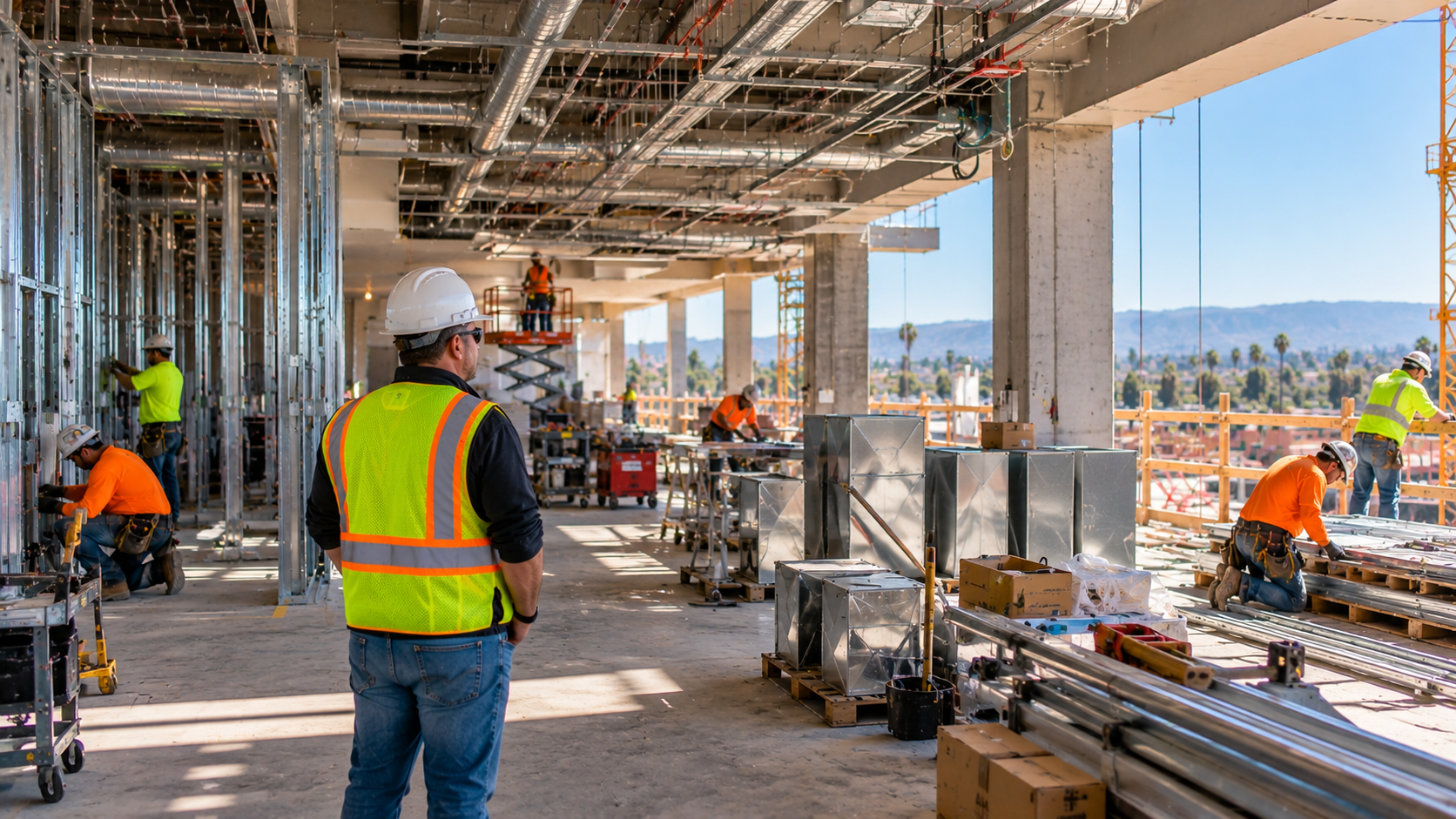
A lot happens on a construction site that someone in the office never sees firsthand.
Conditions change.
Work progresses.
Materials arrive.
Questions come up.
Decisions are made.
Photos are taken.
Conversations happen.
Something that made perfect sense to the people standing there may eventually need to be understood by someone who wasn’t.
That creates an important question:
Can the information coming back from the field tell someone enough about what happened to understand what they need to do next?
Because when information leaves the jobsite, some of the context surrounding it can stay behind.
The Field and Office See the Same Project Differently
Someone in the field has context that can be difficult to capture completely.
They can see the condition.
They know what happened immediately before it.
They may know why something changed.
They heard the conversation.
They understand what the photo is showing because they were standing where it was taken.
Someone in the office may have none of that context.
They may receive a photo, email, message, report, form, time entry, project update, or information entered into a construction platform.
The information may be accurate.
It may even arrive quickly.
But the person receiving it still has to understand what it means.
Information can travel faster than the context needed to understand it.
A Photo Can Show What Happened Without Explaining Why It Matters
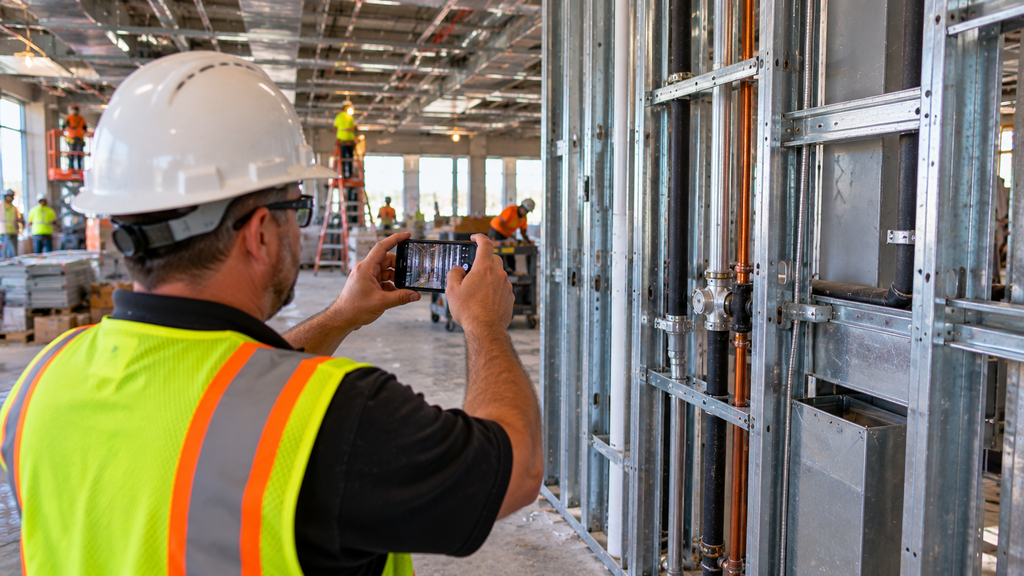
Consider something as simple as a project photo.
A photo may clearly document a condition on the jobsite.
To the person who took it, the meaning may be obvious.
But someone looking at it later may need additional context.
Where was it taken?
What are they looking at?
Why was the photo taken?
Was it documenting progress, a problem, completed work, an existing condition, or something requiring follow-up?
Does anyone need to act on it?
Should it become part of the project record?
The photo itself may not have changed.
The context surrounding it did.
The same can happen with other project information.
Information can accurately capture part of what happened without capturing enough to explain what it means.
Capturing More Isn’t Necessarily the Answer
When the office needs better visibility into what is happening in the field, the obvious response can be to capture more.
More photos.
More forms.
More updates.
More fields to complete.
More documentation.
Sometimes more information is necessary.
But every additional requirement asks something from the people doing the work.
If the field is asked to capture information that nobody uses, the process creates friction without creating much value.
And if the office receives large amounts of information without enough context to interpret it, the underlying problem may still exist.
The better question is:
What does someone who wasn’t there need to understand?
Instead of starting with everything the field could capture, start with what the business will actually need from that information later.
The Goal Isn’t to Turn the Field Into the Office
Better field-to-office information flow shouldn’t mean adding unnecessary administrative work to the field.
The superintendent, foreman, project manager, or field employee has work to accomplish.
Any process for capturing information has to work in that environment.
That means asking:
What is practical to capture where the work happens?
What information actually matters later?
When does it need to be captured?
Who will use it?
What context will they need?
A process that produces perfect documentation but doesn’t fit the way the work actually happens isn’t necessarily a better process.
The process has to work where the work happens.
The Office Has Responsibilities Too
Field-to-office information flow isn’t only a field responsibility.
Sending information somewhere doesn’t complete the process.
Someone may need to review it.
A question may need an answer.
A decision may need to be made.
Information may need to be associated with the right project or record.
Another person may need to become aware of it.
Something may need to happen next.
If the field consistently provides information but nothing visible happens afterward, the process can become difficult to trust.
The question isn’t simply:
Did the field send the information?
It’s:
Did the information support what needed to happen next?
Technology Should Make Useful Information Easier to Capture and Understand
Construction companies have many ways to capture and share field information.
Mobile applications, project management platforms, photos, forms, cloud storage, messaging, time-tracking systems, cameras, and other tools can all play a role.
But the best technology isn’t necessarily the technology that captures the most information.
It should help capture the information the business actually depends on without creating unnecessary friction where the work happens.
It should also help preserve enough context that someone elsewhere can understand and use that information.
That may involve how information is captured, where it belongs, how it reaches the next person, or how different systems work together.
Sometimes a technology change can improve that process.
Sometimes the existing technology is already capable of supporting it.
The recommendation should follow what the operation actually needs.
AI Can’t Recreate Context That Was Never Captured
AI creates another reason to think carefully about the information a construction company creates.
AI can help summarize, search, organize, and work through larger amounts of project information.
But it still depends on the information available to it.
If important context was never captured, AI cannot reliably recreate what only the people standing on the jobsite understood.
And if the underlying information is incomplete or inconsistent, adding AI doesn’t automatically make it trustworthy.
AI increases the value of reliable information. It doesn’t eliminate the need to create reliable information in the first place.
People still remain responsible for understanding the situation and making the decision.
Start With What Someone Needs to Understand
Instead of starting with:
What information can we collect from the field?
Start with:
What does someone who wasn’t there need to understand?
Then work backward.
What information would give them that understanding?
What context matters?
Where does that information originate?
Who is in the best position to capture it?
When should it be captured?
How should it reach the person who needs it?
And what technology, if any, should support that process?
This keeps the technology connected to the business requirement rather than allowing the tool to define the process.
Make the Project Understandable Beyond the Jobsite
The field will always know things the office doesn’t.
That’s part of construction.
The objective isn’t to eliminate that difference or capture every conversation, observation, and decision that happens on a project.
It’s to identify the information the business actually depends on and make sure enough context travels with it to remain useful beyond the place where it was created.
That’s the kind of connection the Construction Technology Framework™ is designed to help examine: how people, processes, project information, and technology work together across the construction operation.
And it’s why a Construction Technology Review™ needs to understand how the work actually happens before deciding what technology should change.
The next time information comes back from the field, don’t only ask whether it arrived.
Ask:
If I wasn’t there, would I understand enough to know what happens next?
That’s Construction First. Technology Second.
Better Decisions Keep Work Moving™.
Understand How Information Moves Between the Field and Office
Construction technology should support the way your company actually works, including how information is created in the field, how it reaches the office, and how people use it to make decisions.
A Construction Technology Review™ looks beyond individual applications to understand how your people, processes, project information, and technology work together.
Using the Construction Technology Framework™ and its Operational Foundations, we look at how information moves through the business, where context may be lost, where unnecessary friction exists, and whether the technology supports the people who depend on that information.
The objective isn’t to collect more information or add more technology.
It’s to understand what your construction company actually needs and determine where technology can help support it.
Take a closer look at whether the information moving between your field and office is giving people what they need to make the next decision.