

Construction companies depend on processes to keep work moving.
Project information needs to get where it’s supposed to go. Photos need to be captured and stored. Time needs to be recorded. Documents need to be reviewed. Approvals need to happen. Information needs to move between the field and office.
Technology often plays a role in those processes.
But having the right process and having the right technology aren’t necessarily the same thing.
A process can make sense on paper and still be difficult to follow when someone is standing on a jobsite trying to get work done.
That’s where an important question comes in:
Does the technology make the right way of working easier?
Because if following the established process requires unnecessary steps, extra effort, or tools that don’t fit the environment where the work happens, people may start looking for another way to accomplish the task.
The answer isn’t automatically better technology.
But it’s worth understanding why the friction exists.
Start With the Process
Before deciding whether technology needs to change, you first need to understand what the process is supposed to accomplish.
Take project photos as a simple example.
The real objective isn’t just to get a photo from a phone into an application.
The business may need the photo to be associated with the right project, available to the people who need it, stored where it can be found later, and handled consistently enough that everyone understands where project photos belong.
The technology is there to support that process.
If you start with the application instead, the conversation can quickly become about features.
Does it have a mobile app?
Can it upload photos?
Can it send notifications?
Can it integrate with another platform?
Those may eventually be important questions.
But the first question should be:
What does the business need this process to accomplish?
Once that’s clear, you can determine whether the technology supports it.
A Good Process Can Still Be Hard to Follow
Sometimes the process itself makes sense.
The problem is what someone has to do to follow it.
Imagine a field employee needs to document something on a project.
The company has already determined where that information should go and who needs access to it.
But completing the process from the field might require several steps, switching between systems, waiting until the employee gets back to a computer, or entering the same information more than once.
Someone in the office may look at the documented process and think:
This is exactly how it should work.
Someone on the jobsite may experience something very different.
That’s why evaluating a process only from the office can miss an important part of the picture.
The process has to work where the work happens.
For a construction company, that means understanding the field experience too.
Friction Tells You Something
When people have difficulty following an established process, what they do next can tell you something.
Maybe they text the information to someone in the office.
Maybe they save it locally and plan to move it later.
Maybe they create another spreadsheet.
Those actions shouldn’t automatically be treated as proof that employees are ignoring the process.
They may indicate that the process isn’t clear, training is needed, the technology doesn’t work well from the field, or the process requires unnecessary steps.
That’s why the workaround itself isn’t always the problem.
It’s a clue about where to look next.
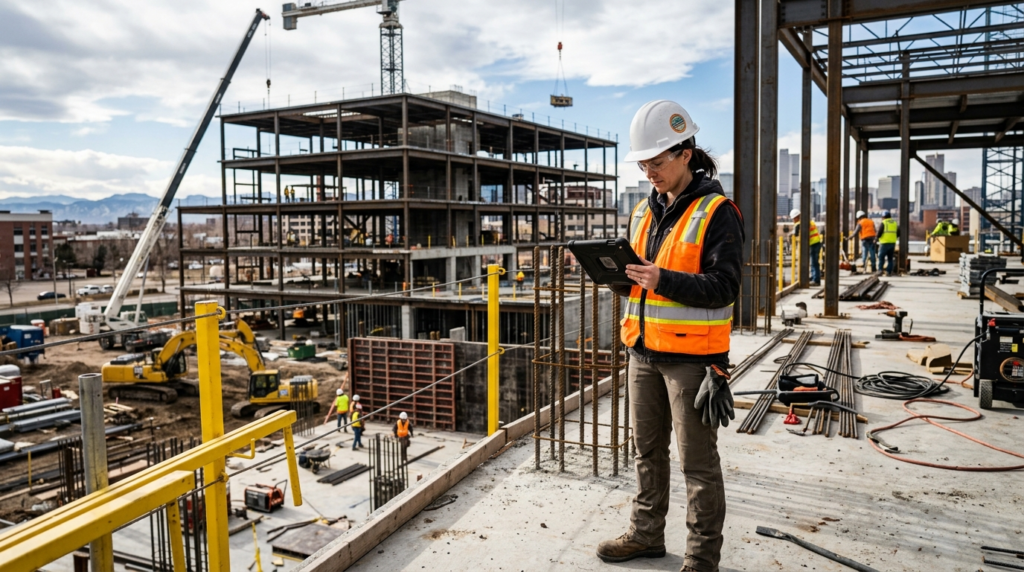
Make the Correct Path the Practical Path
Once you’ve determined what the process should accomplish, the next question is whether the people responsible for it can reasonably follow it.
The goal isn’t necessarily to make every task effortless.
Construction work is complicated. Some processes require multiple steps for a reason.
But unnecessary friction deserves attention.
If employees need to repeatedly find another way around an established process just to accomplish the business objective, something may not be aligned.
The process.
The training.
The technology.
Or some combination of them.
A better approach is to make the established process practical for the people expected to use it.
That might mean simplifying a process.
It might mean improving training.
It might mean clarifying where information belongs.
It might mean configuring existing technology differently.
It might mean changing technology.
And sometimes, after looking closely, the answer may still be:
No change. What you’re already doing works well.
The important part is that the recommendation follows the business need instead of assuming the technology is the answer.
Consistency Matters Because the Information Matters
When a process becomes easier to follow consistently, the benefit goes beyond convenience.
Processes create information.
Field documentation creates project records.
Project setup creates project information.
Time entry creates labor information.
Approvals create records of decisions.
When people follow different paths to accomplish the same task, that information can end up in different places or be handled in different ways.
That can leave someone having to find it, verify it, reorganize it, or recreate it.
Technology can help create consistency, but only when it supports the process people are actually expected to follow.
That’s why making the right way of working easier matters.
It isn’t simply about saving a few clicks.
It’s about helping the company create information that people can find, understand, and use.
Look Across the Construction Operation
A process rarely exists completely on its own.
A field employee may create information that a project manager needs.
A project manager may depend on information from accounting.
The office may need documentation created at the jobsite.
Leadership may depend on information created across several different processes.
That’s why a technology decision that looks small can affect several parts of a construction company.
The Construction Technology Framework™ provides a way to look at those connections:
Connect Teams
Can the people involved communicate and share what they need?
Support the Field
Can the process realistically be followed where the work happens?
Manage Project Information
Does the process create information that is organized and accessible?
Reduce Risk
Is the information and technology being handled appropriately?
Keep Projects Moving™
Can people continue doing what they need to do without unnecessary technology friction getting in the way?
Looking across the operation helps prevent a technology decision from solving one problem while creating another somewhere else.
Technology Should Support the Work
The goal isn’t to make employees adapt their work to whatever technology happens to be in place.
And it isn’t to replace technology every time someone experiences friction.
It’s to understand how the work should happen, how it actually happens, and where the two begin to separate.
Then determine why.
Sometimes the process needs to change.
Sometimes people need clearer guidance or training.
Sometimes existing technology can be configured or used differently.
Sometimes different technology is the right answer.
And sometimes nothing needs to change at all.
That’s what Construction First. Technology Second. means.
Understand the contractor’s operation first.
Then determine what technology actually belongs.
Because technology is most useful when it helps people follow the right process, create reliable information, and keep the work moving.
Better Decisions Keep Projects Moving™.
Make Technology Fit the Way the Work Gets Done
The Construction Technology Review™ looks beyond individual applications to understand how your people, processes, information, and technology work together.
Using the Construction Technology Framework™, M-Squared Networks looks at how technology supports the office and field, where unnecessary friction may exist, and where changes could better support the way your construction company actually operates.
The objective isn’t to add more technology.
It’s to understand what the business needs the process to accomplish and determine whether the technology is helping people accomplish it.
Take a closer look at whether your technology makes the right way of working easier.