
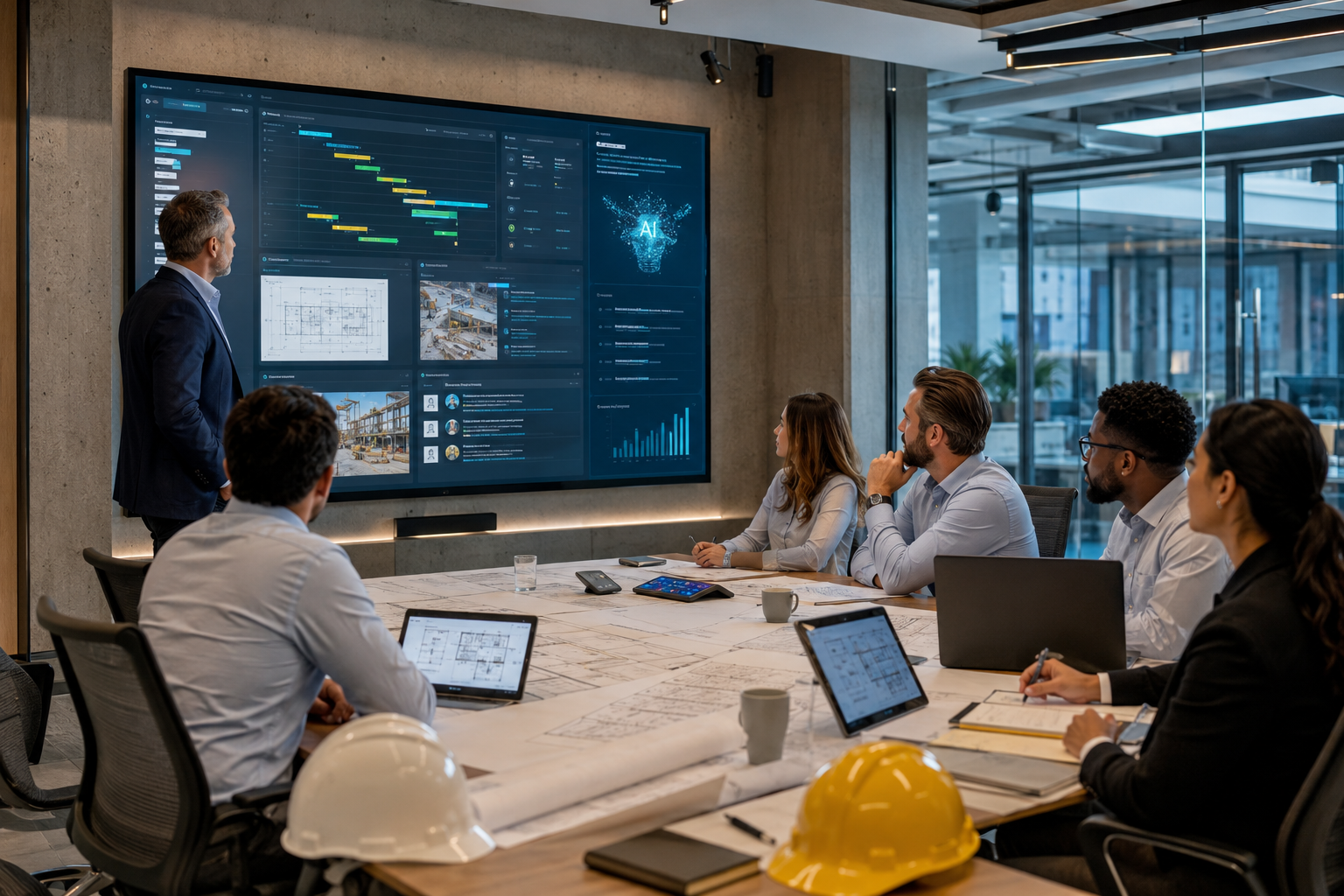
Construction companies are using AI to summarize meetings, search project documentation, draft emails, analyze schedules, and improve communication between the office and the field.
AI has tremendous potential.
However, many companies are asking the wrong question.
Instead of asking:
“Which AI tool should we buy?”
A better question is:
“Is our business ready to use AI effectively?”
AI is only as valuable as the technology, information, and business processes that support it.
If your foundation is weak, AI will expose those weaknesses instead of solving them.
AI Readiness Quick Check
Before investing in AI, ask yourself:
- Are your computers and mobile devices current?
- Is your wireless network reliable?
- Can employees quickly find project information?
- Are your cybersecurity practices mature?
- Do employees know how AI should and should not be used?
If you answered “no” to several of these questions, your technology foundation may need attention before AI can deliver meaningful business value.
Gap #1: Aging Computers Slow AI Adoption
Modern AI tools rely on current hardware.
Older computers often struggle with today’s AI powered applications, cloud services, and collaboration platforms.
If employees already complain about slow computers, AI will not solve that problem.
It will make it more noticeable.
If your computers are showing their age, read 7 Signs Your Construction Company Needs New Computers.
Gap #2: Poor Wireless Connectivity
Most AI platforms depend on reliable cloud connectivity.
Dropped connections, slow Wi-Fi, and inconsistent wireless coverage interrupt AI assisted workflows and reduce employee confidence.
Reliable infrastructure remains one of the most important foundations for successful AI adoption.
Learn more in 7 Signs Your Construction Company’s Wi-Fi Needs Attention.
Gap #3: Disorganized Project Information
AI cannot organize years of inconsistent filing practices overnight.
If project drawings, contracts, specifications, RFIs, submittals, and meeting notes are scattered across multiple systems, AI may struggle to produce reliable answers.
Good information management remains essential.
Gap #4: AI Can Be Confident and Wrong
This may be the most important lesson every construction company should understand.
AI often presents answers confidently.
That does not mean those answers are correct.
Construction decisions affect budgets, schedules, contracts, safety, and client relationships.
Every AI generated recommendation should be reviewed by someone who understands the project.
AI should produce drafts.
People should make decisions.
Gap #5: Employees Don’t Know What Should Never Be Shared
Employees often begin experimenting with AI without understanding what information should remain confidential.
Examples include:
- Construction contracts
- Financial information
- Employee records
- Legal documents
- Client confidential information
- Proprietary estimating information
Every construction company should establish clear expectations before employees begin using AI.
Gap #6: Nobody Owns AI
Who decides which AI tools employees can use?
Who reviews new AI products?
Who develops company guidelines?
Who evaluates security?
Without ownership, AI adoption often becomes inconsistent across the business.
Leadership should establish clear direction before widespread adoption begins.
Gap #7: There Is No AI Usage Policy
Many companies already have cybersecurity policies.
Few have AI policies.
An AI usage policy should define:
- Approved AI platforms
- Acceptable business uses
- Information that should never be entered into AI
- Human review requirements
- Employee responsibilities
Good governance allows companies to benefit from AI while reducing unnecessary risk.
Common Scenario
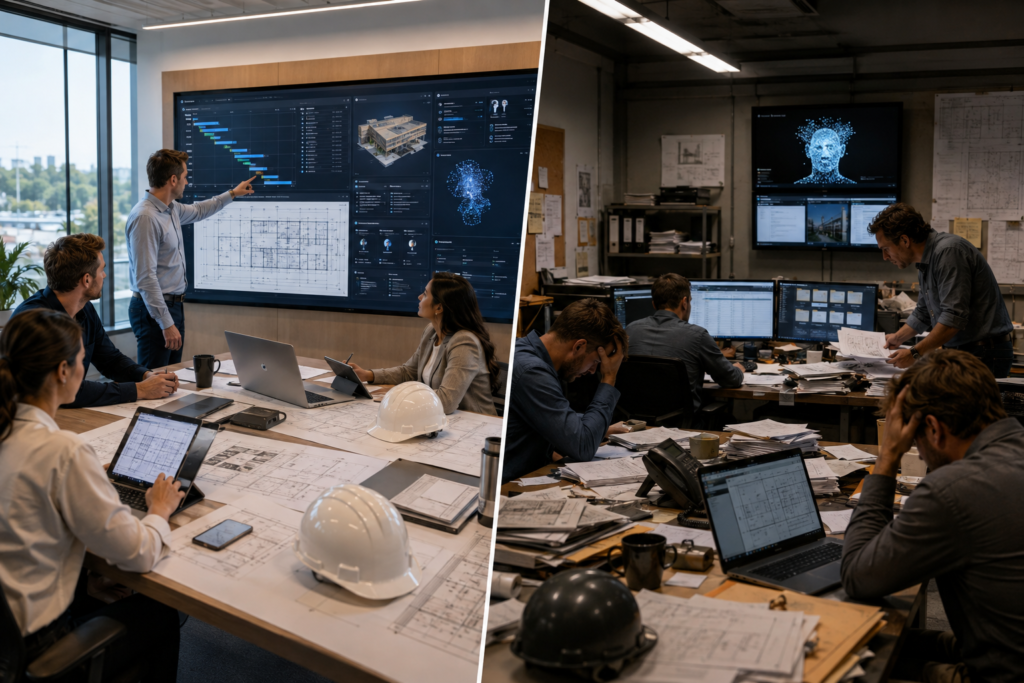
A commercial contractor begins exploring AI after hearing about it at an industry conference.
Several employees start experimenting with different AI tools on their own. One uses AI to summarize meeting notes, another drafts client emails, and a project engineer asks AI questions about project documentation.
While the results are impressive, leadership soon realizes employees are using different tools, following different practices, and occasionally relying on AI generated information without verifying its accuracy.
The company pauses its roll-out and first establishes technology standards, organizes project information, and creates clear AI usage guidelines. Once those foundations are in place, AI becomes a valuable assistant that improves productivity without introducing unnecessary risk.
AI Readiness Check
Before acting on AI generated information, ask:
✅ Is the information accurate?
✅ Has someone reviewed it?
✅ Does it follow our company procedures?
✅ Could an error affect cost, safety, schedules, or contracts?
✅ Would I confidently send this directly to a client?
If the answer to any of these questions is “no,” review the information before acting on it.
What This Means for the Construction Technology Framework™
AI does not replace good technology.
It builds on it.
Within the Construction Technology Framework™, AI strengthens each of the five pillars when supported by the right foundation.
Connect Teams
AI can summarize meetings, organize communications, and improve collaboration.
Support the Field
AI helps field personnel locate project information more quickly.
Manage Project Information
AI depends on accurate, organized, and accessible project information.
Reduce Risk
Human review, governance, and cybersecurity help reduce the risks associated with AI.
Keep Work Moving
The purpose of AI is not to replace people.
Its purpose is to help people work more efficiently while making better informed decisions.
If you are new to our methodology, start with The 5 Pillars of the Construction Technology Framework™.
Final Thoughts
AI is one of the most exciting technologies the construction industry has seen in years.
However, successful AI adoption starts with something much less exciting.
Reliable technology.
Organized information.
Clear business processes.
Thoughtful leadership.
The companies that benefit the most from AI will not be the ones using the newest tools.
They will be the ones building the strongest foundation.
AI should accelerate decision making.
People remain responsible for every decision they make.
Ready to Prepare Your Construction Company for AI?
AI is only as effective as the technology foundation supporting it.
At M-Squared Networks, we help construction companies build secure, reliable technology environments that support productivity today and prepare them for tomorrow’s AI driven workplace through the Construction Technology Framework™.