
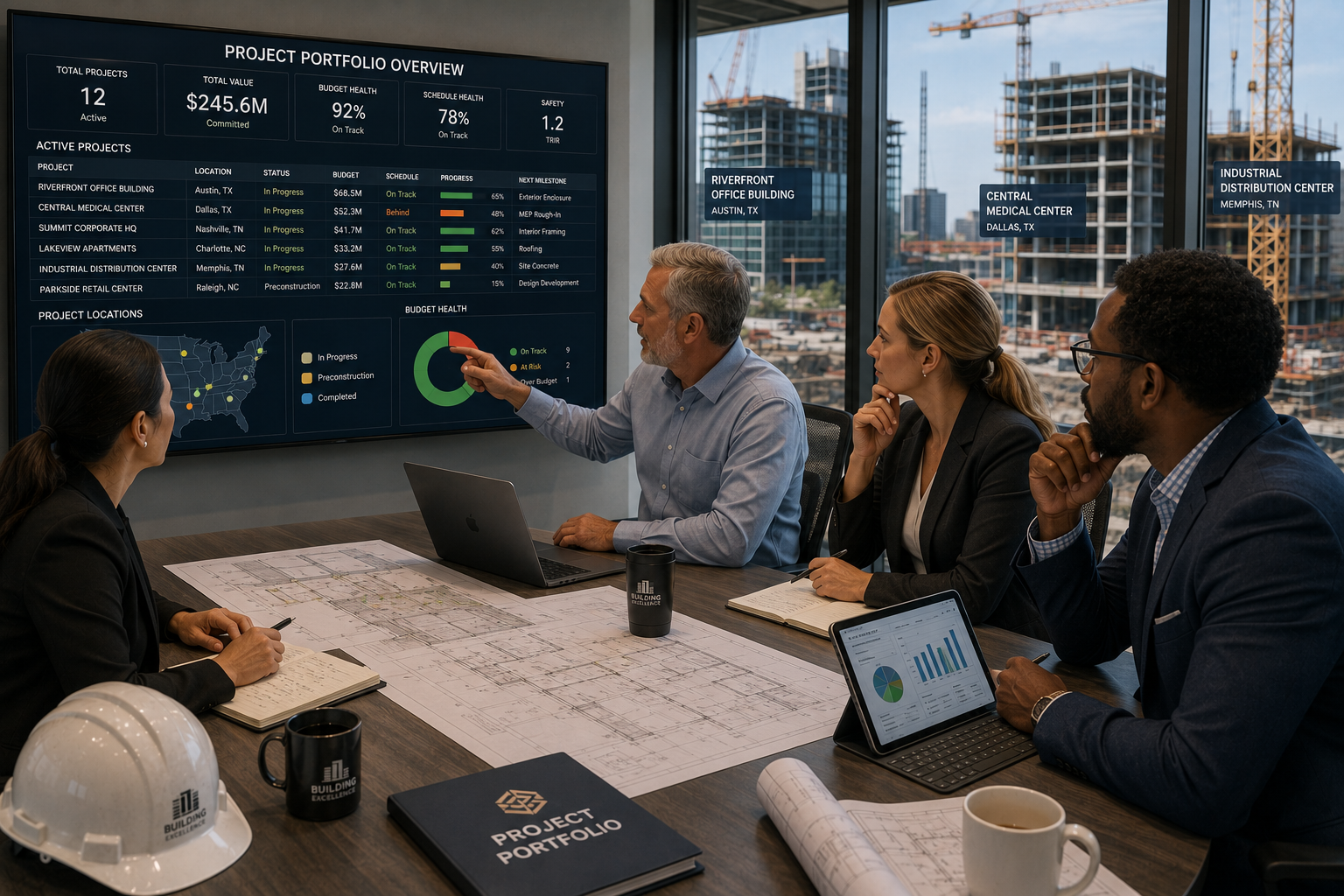
Growth is exciting.
More projects.
More employees.
More jobsites.
More opportunities.
But growth also creates complexity.
The technology that supported a 15-person construction company often struggles to support a 50-person company managing multiple projects across several locations.
That’s usually the point where contractors begin experiencing problems they haven’t seen before.
Communication becomes more difficult.
Communication is often the first operational system to show signs of growth-related strain, as discussed in Why Construction Communication Breakdowns Cost More Than Most Contractors Realize.
Project information becomes harder to manage.
As companies grow, maintaining trusted project information becomes increasingly important, as discussed in The True Cost of Outdated Drawings and Project Information.
Field teams need better support.
Many growing contractors begin seeing more workarounds in the field, as discussed in Why Field Teams Create Workarounds (And What It Costs Construction Companies).
Leadership loses visibility.
Technology isn’t necessarily failing.
The business has simply evolved.
Growing construction companies eventually outgrow traditional IT support because their biggest challenges are no longer technical.
They’re operational.
That’s why the Construction Technology Framework™ focuses on supporting the systems that keep projects moving, not just the technology behind them.
Learn more about the framework in The 5 Pillars of the Construction Technology Framework™.
Traditional IT Support Solves Technical Problems
Traditional IT providers are good at solving technical issues.
They help with:
- Password resets
- Computer problems
- Printer issues
- Email troubleshooting
- Software installation
- Hardware replacement
Those services are important.
Every business needs dependable technical support.
But as construction companies grow, those services become only one part of a much larger picture.
Leadership begins asking different questions.
Questions like:
- Why is communication inconsistent between projects?
- Why are field teams creating workarounds?
- Why is project information difficult to locate?
- Why do the same operational problems keep happening?
- Why does technology still feel like an obstacle?
Those questions cannot be solved with a help desk ticket.
Growth Changes the Technology Conversation
As organizations grow, technology becomes part of daily operations.
It influences:
- Communication
- Project coordination
- Document management
- Scheduling
- Field productivity
- Operational visibility
- Business continuity
Technology is no longer supporting one office.
It’s supporting an entire construction operation.
That requires a different approach.
Instead of asking:
“Is the technology working?”
Leadership begins asking:
“Is the technology helping our projects move more efficiently?”
That shift changes everything.
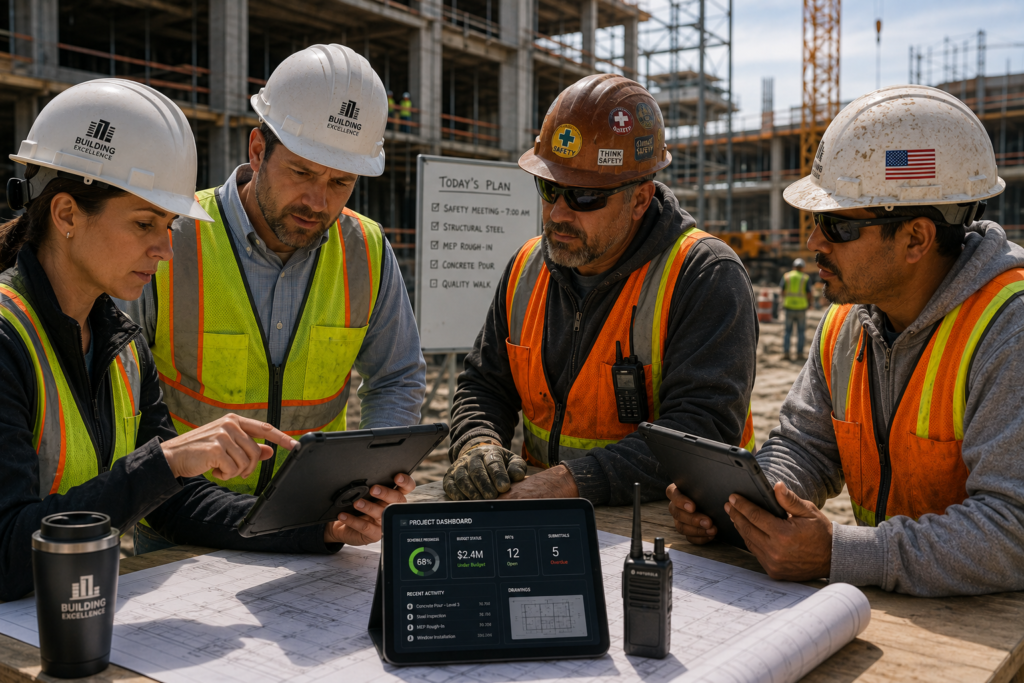
Signs Your Company Has Outgrown Traditional IT Support
Many contractors don’t recognize the transition until operational friction begins affecting projects.
Some of the most common signs include:
Communication Varies Between Projects
Each project manager develops different processes.
Consistency disappears.
Field Teams Depend on Workarounds
Employees rely on texting, personal devices, or manual processes to keep projects moving.
Project Information Is Difficult to Manage
Documents exist.
Finding the correct version becomes increasingly difficult.
Leadership Has Limited Visibility
Information exists across multiple systems, making operational oversight more challenging.
Technology Decisions Become Reactive
New software is added to solve immediate problems instead of supporting a long-term operational strategy.
One or two of these issues may not seem significant.
Several occurring together often indicate the company has reached a new stage of growth.
If you’re unsure where your organization stands, start with How Healthy Are Your Construction Operations? A Self-Assessment for Contractors.
What Operational Technology Support Looks Like
Operational technology support begins with a different objective.
Instead of simply responding to technical issues, it asks:
How can technology better support construction operations?
That includes improving:
- Communication between office and field teams
- Access to trusted project information
- Field productivity
- Operational consistency
- Business continuity
- Leadership visibility
Technology becomes part of the operational strategy instead of an isolated support function.
That’s where long-term improvements begin.
The Construction Technology Framework™ Bridges the Gap
The Construction Technology Framework™ was developed specifically to help growing construction companies navigate this transition.
Rather than focusing only on hardware and software, the framework evaluates five operational pillars:
- Connect Teams
- Support the Field
- Manage Project Information
- Reduce Risk
- Keep Work Moving™
Together, these pillars help ensure technology supports the way construction companies actually operate.
Growth becomes more manageable because operations become more consistent.
Real Example
A Southern California contractor experienced rapid growth over several years.
Their IT provider responded quickly to support requests.
Computers worked.
Email worked.
Servers were stable.
Yet leadership still felt like projects were becoming harder to manage.
Each new project seemed to introduce additional complexity.
Communication varied between teams.
Project documentation became increasingly difficult to organize.
Field support requirements continued growing.
The technology itself wasn’t the problem.
The operational systems surrounding the technology hadn’t evolved with the business.
After evaluating operations through the Construction Technology Framework™, leadership standardized communication processes, improved information management, strengthened field support, and created more consistent operational practices.
The result wasn’t simply better technology.
It was a business better prepared for continued growth.
Why This Matters for Construction Leaders
Every growing company reaches a point where technical support alone is no longer enough.
Growth requires operational consistency.
The stronger the operational systems become, the easier it becomes to:
- Scale the business
- Support additional projects
- Onboard new employees
- Improve communication
- Increase productivity
- Maintain project momentum
Technology should evolve alongside the business.
Not struggle to keep up with it.
Why Contractors Across Southern California Use M Squared Networks
For more than a decade, M Squared Networks has helped construction companies throughout Orange County, Los Angeles County, Riverside County, and the Inland Empire align technology with operational success.
We’ve learned that growing contractors don’t simply need someone to fix technology.
They need a partner who understands how communication, field operations, project information, cybersecurity, and business continuity all contribute to successful projects.
That’s why we built the Construction Technology Framework™.
Because successful construction companies don’t just need better technology.
They need technology that helps Keep Projects Moving™.
Final Takeaway
Growth changes everything.
The systems that supported your business five years ago may not support where you’re going next.
Traditional IT support remains important.
But growing construction companies eventually need something more.
They need technology aligned with operations.
They need consistent communication.
They need trusted project information.
They need resilient systems.
They need a framework that supports growth without increasing operational friction.
That’s exactly what the Construction Technology Framework™ was designed to do.
Has Your Company Outgrown Traditional IT Support?
If your business is growing, adding projects, hiring employees, or expanding into new markets, now is the right time to evaluate whether your technology is supporting your operations—or simply keeping up with support requests.
A Construction Technology Framework™ Assessment identifies operational gaps and provides practical recommendations across all five pillars of the framework.